
The Pacific Salmon Treaty ignores our most valuable fish
By Brian Bennett and David Mills
Here is everything the Pacific Salmon Treaty has to say about steelhead — the sea-going rainbow trout that anchors some of the most valuable recreational fisheries in the Pacific Northwest:
Article IX: Steelhead. In fulfilling their functions, the Panels and Commission shall take into account the conservation of steelhead.
That is the entire article. Sixteen words. There is no second sentence.
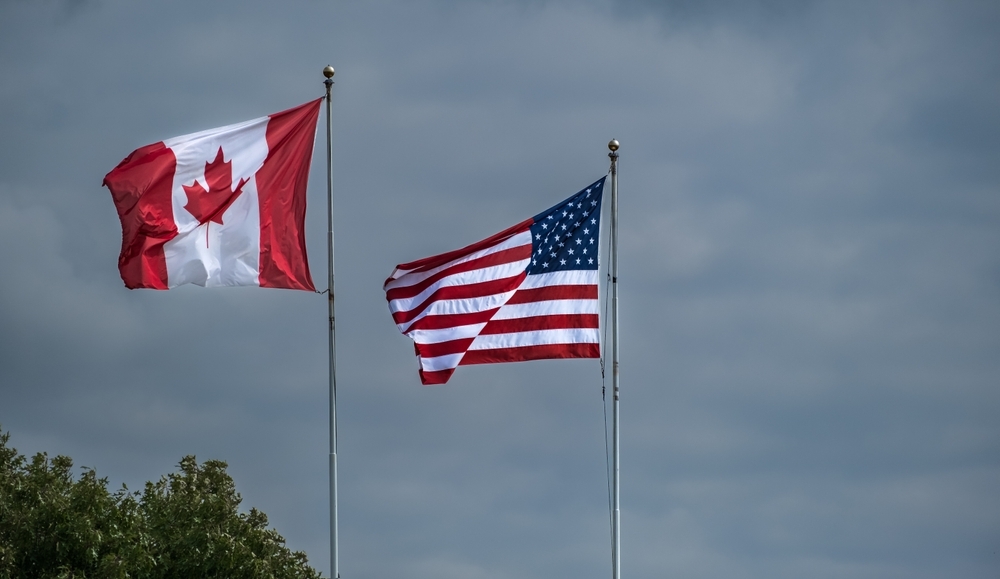
Most anglers have never had a reason to read the Pacific Salmon Treaty. For steelhead, a better one is vital to their future — so we need to engage with it. The United States and Canada signed the Treaty in 1985 to solve a problem that geography created, and neither country could fix alone. Salmon do not respect borders. A fish spawned in a Washington river spends years in the North Pacific, and on its way home it swims through Canadian and Alaskan waters where boats are waiting. The Treaty calls this interception, and the scale of it is not small. For example, over ninety percent of the Chinook caught in Southeast Alaska’s troll fishery originate in the rivers of British Columbia, Washington, and Oregon.
Now consider what the same Treaty says about Chinook, the species with the widest migrations and the most complex life histories among the salmon managed by the Treaty. Chapter 3 runs for dozens of pages. It establishes abundance-based catch limits recalculated every year against a coastwide model. It maintains a standing technical committee that reports annually on catch, escapement, harvest rates, and exploitation rates. It runs a decades-long coded-wire-tag program. It sets a hard ceiling on incidental mortality — the fish killed by accident — of 59,400 in the Southeast Alaska fishery and 38,600 across the northern British Columbia and west Vancouver Island fisheries combined. If a fishery exceeds its limit, the overage is paid back the following year. This management machinery — technical committees, escapement goals, harvest sharing, genetic sampling of commercial catch, annual reporting — is imperfect, argued over, and chronically underfunded. It is also real. When a Treaty stock slips, the numbers show it, and managers can respond.
Steelhead are not afforded any of that — no panels, no counts, no reports — despite being extremely valuable to fishing communities across the Pacific Northwest who sustainably benefit when they return to our rivers. So, when this equally complex fish, which is legally considered a salmon by both the U.S. and Canada are killed by the thousands in Treaty fisheries, there are no consequences. They sit entirely outside a machinery built only to manage fish harvested for food.
Wild steelhead are predominantly intercepted in the commercial net fisheries of Southeast Alaska, and British Columbia’s north coast. Because they are migrating through the same corridors, at the same time as the sockeye and pinks those fisheries target, they end up in the same purse seines and gillnets. Ask how many die in the Treaty’s salmon fisheries in a season, and the honest answer is that nobody can say. Not because mortality is trivial. Because no one is required to write the number down. Decades ago, steelhead were abundant enough that tens of thousands turned up as recorded bycatch. Today, with populations moving the wrong way, that count tells a story too inconvenient to record. So, most commercial fisheries simply stopped recording it. Steelhead thrown over the side are presumed to have swum away, and the inevitable release mortality isn’t counted either.
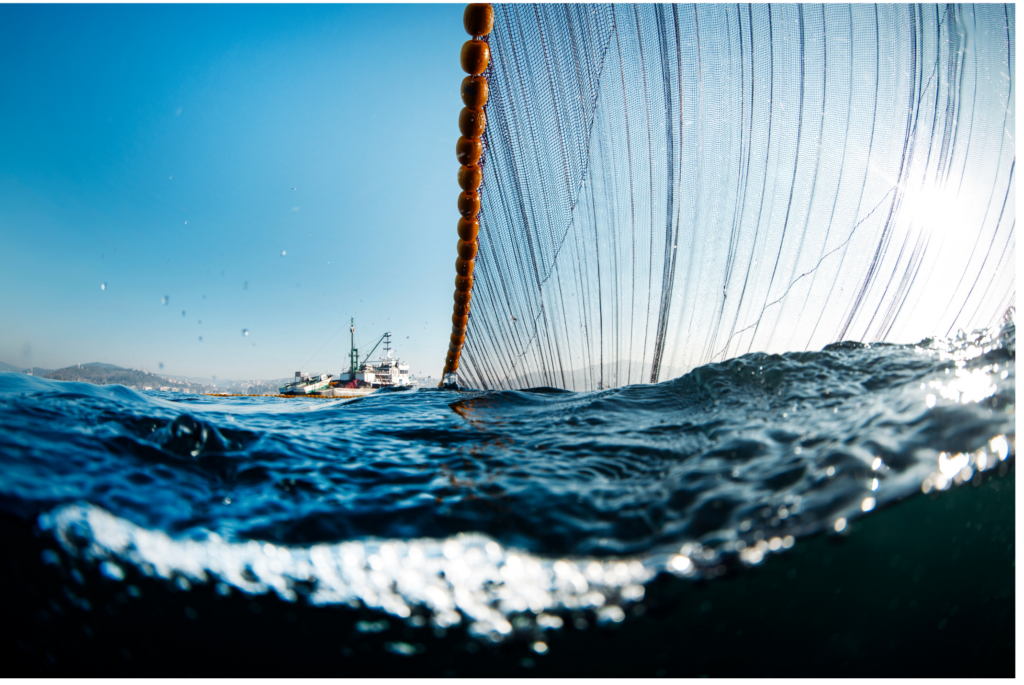
However, because of this simple failure to conduct an honest accounting of incidental mortality, the management solution is equally straightforward: Start counting the fish. Sample them so we know whose rivers they were bound for. Generate a defensible estimate of release mortality rather than assuming survival. Report the number on a fixed schedule through the Pacific Salmon Commission, using consistent methods coastwide. That needs to be our ask — and it benefits more than steelhead. We need to count every salmonid that ends up in a net when there is no opening for them, or when they are not the targeted species. Counting the fish is the foundation that all other management efforts stand on.
The current PST chapters expire at the end of 2028. Preparation for the next round has already begun, and the formal work concludes a year before the deadline. Those agreements are rewritten roughly once a decade. If steelhead miss this window, the next one opens in the mid-2030s, so the time for us to act is now. Renegotiations respond to pressure, and pressure is the one thing our community can supply. The Treaty started accounting for Chinook interceptions because the people who value them fought for a seat at a table.
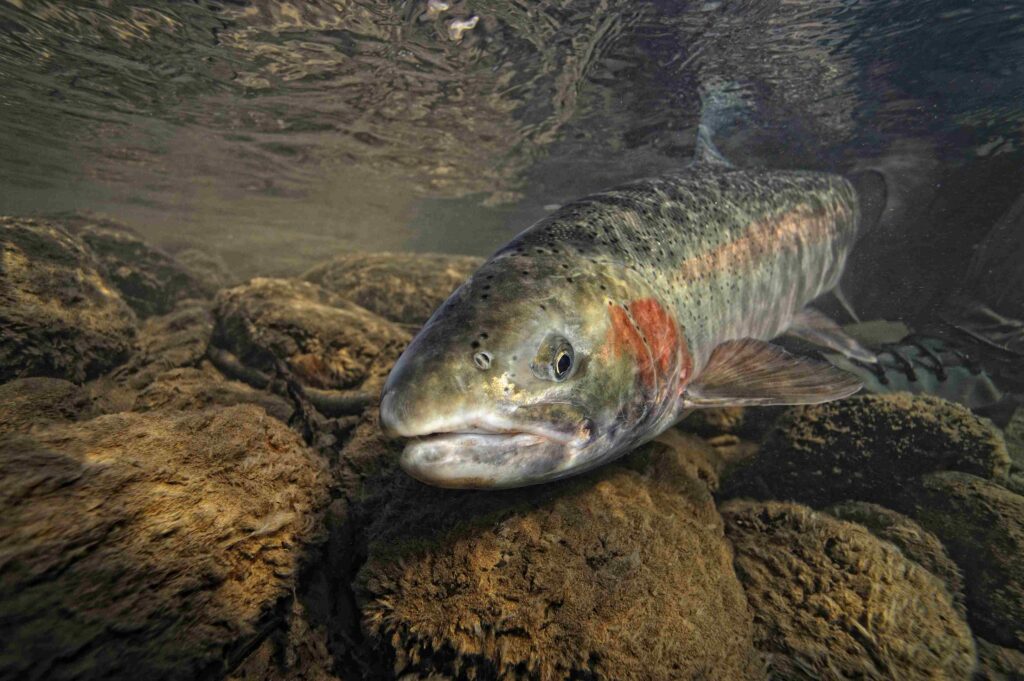
It’s time for steelhead to get a seat at that table. And it’s time for decision-makers in Washington and Ottawa to hear from us. Write to the Secretary of Commerce. Write to the Canadian and U.S. Commissioners of the Pacific Salmon Commission. Write to Canada’s Minister of Fisheries and Oceans. Carry one clear demand: count all the wild steelhead these fisheries kill and tell us the number.
For forty years, sixteen words have stood between wild steelhead and every protection the Treaty knows how to give. Let’s go get some more.
Brian Bennett is a communications staff writer with The Wild Steelhead Coalition based in Seattle, Washington. David Mills is the Managing Director of The BC Federation of Fly Fishers based in Courtenay, British Columbia. The BCFFF and the WSC are joining forces to support steelhead conservation across their range.